Bjørn Morten Christophersen
Bjørn Morten Christophersen

Photo: Morten Lindberg
Composer
& arranger
WINNER OF SPELLEMANNSPRISEN, “COMPOSER OF THE YEAR” 2025
Nominated to:
Spellemannsprisen 2022
NKF, Work of the Year 2024
MUSIKKFORLEGGERPRISEN 2016, 2021
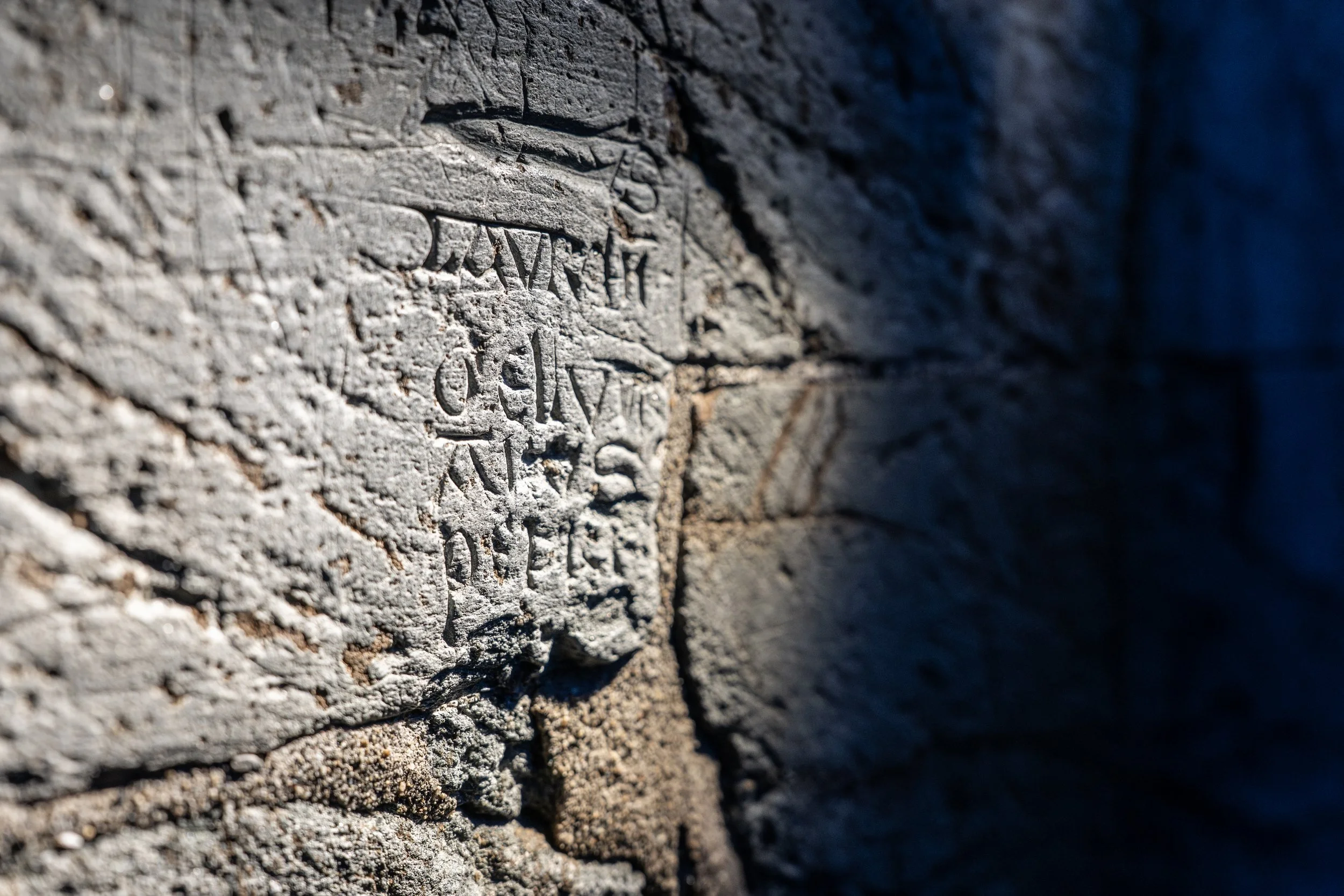
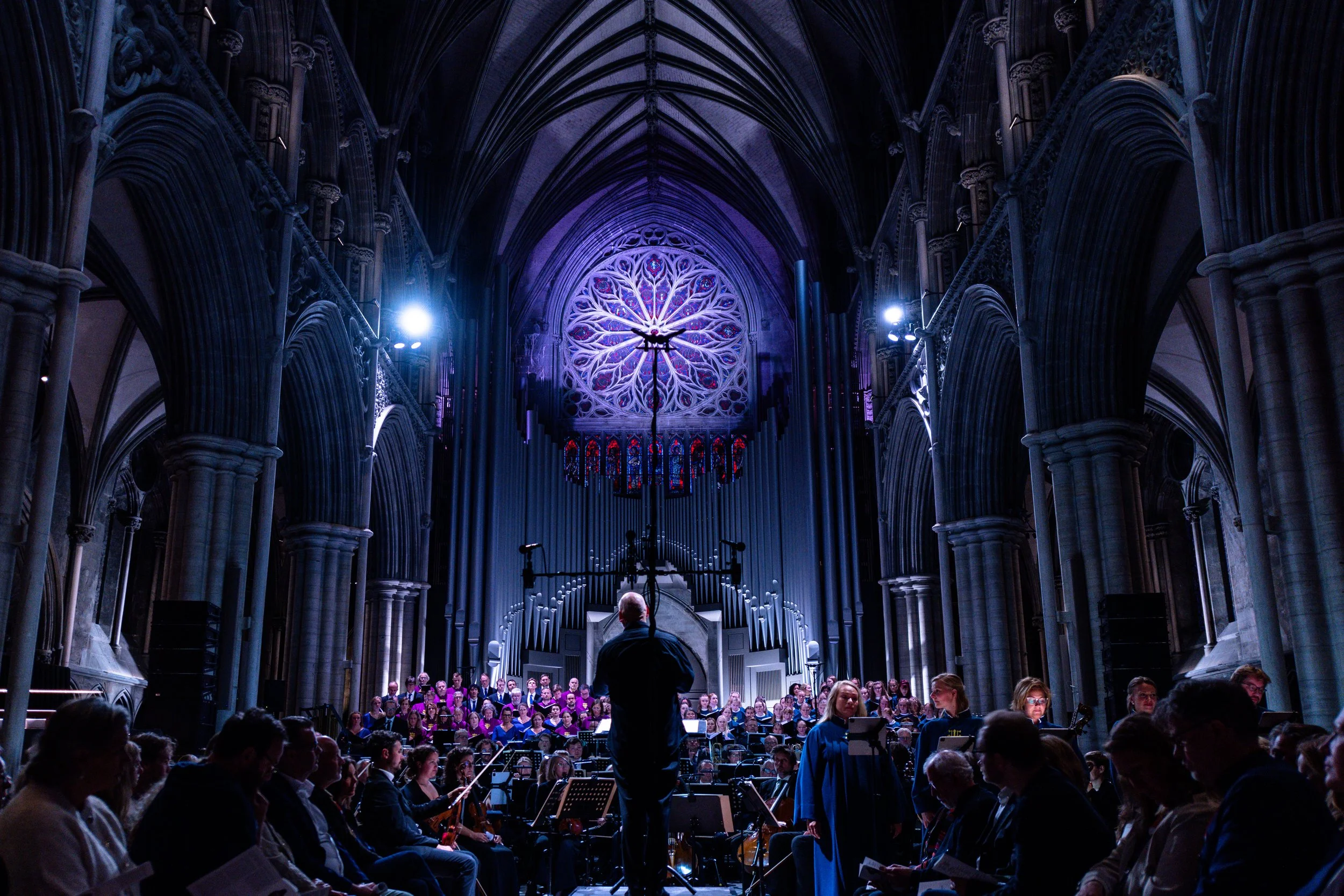
MASS OF GRAFFITI
For Choir, Children’s choir, Vocal Ensemble, Organ and Symphony Orchestra
Libretto compiled by the composer from Church Graffiti and Epitaphs from Antiquity, The Middle Ages and Early Modern Times collected from Hagia Sophia (Istanbul), St Sophia Cathedral (Kyiv), Nidaros Cathedral (Trondheim) and 17 other Medieval churches around Europe.
Durata: 70 minutes
Premiere: Olavfest, 3 August 2026 in Nidaros Cathedral
Trondheim Symphony Orchestra, Trondheim Vocal Ensemble, Nidaros Cathedral Choir, Oslo Cathedral Choir, Nidaros Cathedral Girls’ Choir, Petra Bjørkhaug (Steinmeyer Organ), conducted by Ingar Bergby.
-
I have compiled the libretto for this work from authentic graffiti and epitaphs collected from twenty medieval churches around Europe. All words sung have once been carved into stone or wood by mostly anonymous human beings inside or on a church. My main sources have been the three legendary buildings of Hagia Sophia in Istanbul (Constantinople), the Sophia Cathedral in Kyiv and the Nidaros Cathedral in Trondheim. These landmarks represent three different centres of cultural gravity, different paths of Christianity and linguistic diversity. At the same time, they are historically bound together by thousands of years old trade routes between Scandinavia and Constantinople, from the Baltic Sea through the rivers of Eastern Europe, crossing the Black Sea and down the Bosphorus Strait to the Byzantian Capital, called Miklagard (The Great City) in Norse. The nearly thousand years old runic carving with the Viking name of "Halfdan" is still readable on the top of a fence in the Western Gallery of Hagia Sophia (a simple fact and evidence that can bring tears to my eyes). The Nidaros Cathedral in Trondheim was built above the grave of the Norwegian king St Olav. His death at the Battle of Stiklestad in 1030 marks the transition from paganism to Christianity in Norway (in reality a much more complex process, of course). Olav spent several years in Kyivan Rus. Although he never went all the way to Constantinople himself, his brother was there, and a Chapel was later built there in his honour.
In addition to these three iconic cathedrals, I have collected single inscriptions from local stone churches in England, wooden stave churches in Norway, a pagan epitaph found underneath the Basilica of St Peter in Rome, the quite famous epitaph of Alcuin of York, who was one of the leading scholars in the Carolingian court and laid to rest in St Martin's Church in Tours in 804, as well as the famous Latin SATOR palindrome, which exists in numerous places around Europe, among them in the Abbey of St Peter ad Oratorium in Capestrano.
Hagia Sophia was built in the middle of the 6th century. Constantinople was conquered by the Ottomans in 1453, who then converted the church into a Mosque. The large collection of Greek inscriptions in Hagia Sophia, then, were mainly carved during the 900 years it served as the main church of the Byzantian Capital. The famous runic graffiti in Hagia Sophia, already mentioned, are likely carved during the 11th century by Vikings serving as mercenaries for the Byzantian Emperor. The St Sophia Cathedral in Kyiv was built during the 11th century and the many inscriptions there in Old Church Slavonic language were carved throughout the following couple of hundred years, both before and after the Mongolian conquest of Rus in the 13th century. The Nidaros Cathedral was built during the 12th and 13th centuries. Its inscriptions are both in Latin and Norse, the earliest carved probably late 12th century and the youngest late 15th century. I have not included graffiti carved after the Reformation in Denmark-Norway in 1537 since most of the existing research focus on Pre-Reformation period in Norway. The youngest texts included in the work are epitaphs in Latin from the early modern times in English churches.
A graffito can be defined as an unauthorized text, drawing or symbol carved on a surface not intended for inscriptions. In churches graffiti are found on walls, columns, portals and fences. Some of my sources are carved into wooden sticks or animal bones found underneath the church floor. I have limited my selection to graffiti consisting of words. Even though crosses, boats, symbols and other drawings are very common they cannot be sung. Authors of these texts have likely been stonemasons, clergies, pilgrims or members of the local congregations, that is, anyone who lived near or travelled by the church. Although illiteracy was widespread and few could read complex texts such as the Bible, many people could read and write a little. It is telling that one often finds variants of: "Can you read this?" or "You who read this, pray for me." While the graffiti is unauthorized, epitaphs are usually carved by professionals. Tombs were placed under church floors, in walls or in vaults underneath the nave. The fact that these graves were placed inside the churches and provided with costly inscriptions connects them to the wealthy and the upper classes of Mideval society. What all the selected texts, graffiti or epitaphs, have in common is that they were found inside or on the outer wall of a church.
Concerning the contents of the graffiti, names and prayers, often in combination are most common. Phrasings like "Lord, help your servant [+ a name]" is highly representative for both Hagia Sophia (Greek) and the St Sophia Cathedral (Old Church Slavonic). Variants of "God owns my soul" is more common in the Norwegian sources. Some of the names may be carved by pilgrims to testify their presence at the destination. Some may also express more "earthly" needs of marking one's territory, i.e. types of signatures we often see in metro stations and elsewhere in modern cities too. Otherwise, church graffiti expresses love, fear, eroticism, curses, peace treaties, philosophy, bullying, witness proves, riddles, puns etc. etc., all type of statements we can recognize from modern public spaces too. The epitaphs, however, tell a different story. Sometimes they consist of a short biography of the dead. A very touching example, I think, is: "Mary Hooper bore nine children, and while giving birth to the tenth, she gave her soul to God." Other address the reader, asking for a prayer. One example is the opening words: "Whoever you are who passes by, stand, read, weep and pray: I am what you will be, for I had been what you are". This is a memento mori which exists in numerous variations around Europe all the way back to pagan Antiquity. It is as the dead still speaks directly to us continuously through history.
The Greek, Norse and Old Church Slavonic texts are transliterated into Latin letters in the score. The question of pronunciation is difficult because the matter of local dialects and historical variants throughout the Middle Ages is a very complex one and clues are few. How did a Norwegian clergy pronounce Latin during the 1200s, for instance? Nevertheless, I have made some likely adjustments of the spelling for practical use in the score: The Greek letter of "b" (β) was already pronounced "v" in Byzantian Middle Ages rather than "b" as in Greek antiquity. Hence, the Greek word for "help" ("βοήθει") has been transliterated as "voethei", rather than "boethei". The word "Kyrie" which is commonly pronounced with a "y" in the mass ordinary today, I suggest to be pronounced "i", as the Greek did and still do. To remind the singers of this, I have actually spelled it "Kirie" in the score. While a common transliteration of the Slavonic word for "church" would be "cerky", I have spelled it "tserky" in the score to reflect a more likely pronunciation.
The texts are mainly to be sung in their original languages. But in a few passages, they should be sung in English translation too, to communicate their messages more directly.
Writing this work involved extensive research into inscriptions of the past. Firstly, to achieve some kind of overview of what kind of material exists and who the carvers were seemed necessary to make a reasonable and representative selection for a libretto. Secondly, many sources are worn-out and appear only fragmentary, which make it more difficult to keep a sense authenticity of the "original voice" and message all the way through the score. Numerous inscriptions consist of only a few letters which leaves their intentions extremely open. Others are evidently fragments of complete sentences or even paragraphs, but still have too many blank spots to be useful here. On the other hand, often I struck into inscriptions that immediately spoke to me and made me sense a personality and feel some sort of "closeness" to the thoughts of a human being living a thousand years ago. I wish I could have included many more of the unique voices I have become familiar with during this process.
I have visited some of the churches in question during research and observed inscriptions there myself, most importantly Hagia Sophia and Nidaros Cathedral. (To visit Kyiv is difficult due to the ongoing war.) It can be quite overwhelming to see and sometimes even touch the expressed carvings of a person. Though long dead it is like he or she still lives in that very carving. You can see how a sharp object like a knife has moved through the material of wood or stone. You can reflect on the laborious work behind a short message from a medieval pilgrim compared to the spontaneity of a tweet by a friend from Yesterday. Having said this, only occasionally I could actually read bits of the content at the location. I neither speak nor read Greek, Slavonic or Norse. (I know enough Latin to stitch together reasonable translations of shorter texts.) Fortunately, epigraphy is a century old, highly developed and complex field of science. Through innumerable books and articles researches meticulously have laid forth their transcriptions, transliterations and interpretations of worn-out inscriptions letter by letter. The patience, thoroughness and slowness behind these scholarly works is impressive, overwhelming and quite moving, I think. The existence of this research express the strongest urge among humans to understand, to learn from, to pay attention to and respect each other, I think. The field of epigraphy makes me feel a strong sense of historical community.
In addition to published books and articles I owe my deepest gratitude to a few people. Searching for inscriptions from Kyiv, I banged my head against the wall for a long time until I finally came across Antoaneta Krastanova Andonova Granberg, Docent at the Gothenburg University. She opened the door into a flourishing world of inscription collected from the St Sophia Cathedral: Prayers, names, curses, confessions, philosophy, peace treatises and other historic events have been documented. Antoaneta presented an extensive selection of inscriptions for me. She transliterated and translated and we discussed the content and meaning of many curious inscriptions. She also recorded sound samples of pronunciations, which turned out to quite a delicate matter. The texts are nearly thousand years old and no one knows exactly how the Old Slavonic Language was pronounced around in Kyivan Rus. And due to the ongoing war in Ukraine, which is both military brutal and culturally inflamed, Antoaneta felt she had to consider carefully and consult her colleagues whether to lean towards Ukrainian, Russian or a pronunciation in between.
For the material from Hagia Sophia, I particularly owe my gratitude to Rachael Helen Banes, Post Doc. at the Austrian Academy of Sciences. She pulled out a selection for me and have been most helpful describing how it represents the bulk of inscriptions and answered my questions patiently. I will also thank archaeologist Maria Hielte for translations of Greek scholarly works on Hagia Sophia.
The inscriptions in Norwegian churches have been much more accessible. I have particularly relied on Johan Bollaert's Doctoral thesis which contain a complete catalogue of inscriptions from Medieval churches in Norway. Bollaert has also recorded pronunciations of the Norse inscriptions and has been most helpful answering my questions.
I would also like to thank Øystein Ekroll and Rune Langås at the Nidaros Cathedral Restoration Workshop for letting me observe the work of stonemasons, blacksmiths and glaziers working patiently still with the same techniques and tools as in the Middle Ages.
Finally, I would like to thank Frank Havrøy, baritone singer and artistic leader of Trondheim Vocal Ensemble who in 2023 introduced me to Trondheim Symphony Orchestra and Olavfest, which led to the commission of this work to be premiered during Olavfest in Nidaros Cathedral 3 August 2026.
B. Morten Christophersen
Oslo, 1 March 2026 -
Coming soon
-
-
Krigsseilerrekviem /
War Sailors’ Requiem
Premiered by Tora Augestad (mezzo), Thorbjørn Guldbrandsøy (tenor), Magnus Ingemund Kjelstad (baritone), Magne Fremmelid (bass), The Norwegian Opera Chorus (Martin Wettges, choralmaster), The Royal Norwegian Navy Band, Bjarte Engeset (conductor) at Oslo Concert Hall, May 31th 2022.
WINNER OF SPELLEMANNSPRISEN 2025, Composer of the Year. Nominated to WORK OF THE YEAR 2024 BY Norwegian Composers’ Society
-
Royal Norwegian Navy Band has been a significant supporter of the war sailors’ cause for many years. “War Sailor's Requiem” was commissioned for The Royal Norwegian Navy Band 's 200th anniversary in 2020. The anniversary coincides with the 75th anniversary of the truce in 1945.
I have composed the Libretto based on many different sources. Most of the text is the war sailor’s own words taken from letters, diaries, memoirs, or interviews. Naturally, I have had to shorten and adjust the texts to adapt for song.
I have also incorporated some poems and songs that have been significant in war sailor history. This includes an excerpt from Herman Wildenvey's poem written for the opening of the Memorial Hall in Stavern for the fallen sailors of World War I. Furthermore, I have included the hymn "Who knows how near my end is to me?" recommended for burials at sea by the Altar Book from 1945. Then I have included an adaptation of Nordahl Grieg's poem "It was home we Norwegian sailors were destined to," and finally the shanty "Rolling Home," which has German origins, probably from the 1870s.
Next, I have put it all together in the context of the traditional Catholic requiem. Music history has a rich requiem tradition. During the work, I realized that there is also a significant war requiem tradition that extends far beyond Benjamin Britten's iconic work. Excerpts from the requiem text are sung in both Latin and Norwegian. I hope that this will tie the work closely to the requiem tradition while also highlighting the striking similarities with the sailors' accounts. At times, they almost seamlessly blend into each other.
The development mostly follows that of the requiem, meaning that I let the sailors' stories reflect and actualize the requiem. This is not one continuous story from 1939 onwards, nor is it a single sailor's story.
The premiere was due to November 8th 2020 at the Norwegian Opera’s main stage. It was, however cancelled during the general rehearsal due to a covid outbreak. Finaly, the work was premiered in Oslo Concert Hall May 31th 2022 with great success.
-
I. INTROITUS: REST IN PEACE
Requiem aeternam dona eis, Domine et lux perpetua luceat eis.
Light,
the whole convoy lay bathed in light.
Heavens and sea were transformed to fire.
They fight their final battle
and enter the final rest.
Shall also we die like they die?
Rest in peace each soldier of peace
in your sunken grave.
Silent you sank, the memory climbs
like sun from the sea.
As day ascends, so too
all the sea did take.
Requiem aeternam dona eis, Domine et lux perpetua luceat eis.II. KYRIE: HAND OF DEATH
It’s coming, the torpedo.
Kyrie eleison.
I feel the hold on my throat,
weariness in my knees.Lord, show mercy unto us.
The boat throws violently.
The sea is vast.
In the lifeboat,
we row so the sweat gushes,
but the hands perish from the frost.
The snow lashes the face.
Christe eleison.
The face in the lifeboat.
Kyrie eleison.Hand of Death,
mountain of waves
coming toward us,
reaching after us
the foamy crest gushing in front.The face in the lifeboat
Tears are my bread day and night,
while they incessantly ask meg:
Where is your God?
III. GRADUALE: SHANTYAs day ascends, so too
all the sea did take.
Et lux perpetua luceat eis.
Light,
the whole convoy lay bathed in light.
Heavens and sea were transformed to fire.
Onboard on the burning ship
they fight their final battle.
Shall also we die like they die?
IV. DIES IRAE: WE CARRY ONDear Selma,
what do you feel?
Perhaps the same as me?
You feel it in your heart,
I feel it in my stomach,
as I have no heart at all.I'm very dissapointed about myself,
never made up to be a hero.
Not a coward, I hope.
We carry on sailing.Then, suddenly there was a heavy crash.
We carry on sailing.
Yes, suddenly there was a heavy crash.
We carry on sailing.
Another follows, yet another blast.
We carry on sailing.But everything is quiet,
there is nothing to see.
We carry on sailing.
1. Day of wrath and doom impending,
Heaven and Earth in ashes ending,
David’s word with Sibyl’s blending.2. Oh, what fear man’s bosom rendeth,
when from heaven the judge descendeth,
On whose sentence all dependeth.It is a strain to go for days and nights,
We carry on sailing.
expecting to be blown up by a terrible blast. We carry on sailing.Who knows if or when or where?
We carry on.
Will she float or will we go straight down?The sea stands in flames around the boat,
the heat is gruesome.
Dies irae, dies illa,
solvet saeclum in favilla:
teste David cum Sibylla.
We carry on.We rowed
with a wave of burning fuel after us.
The sea of flames engulfed the others.
The heat, the warmth!
Some remained on deck
and they knew.
We carry on sailing.
I confess I'm afraid to die.
We carry on.
I admire the others,
admire them.
So there it is again,
a door slammed, something fell on deck. Will you be killed or wounded?
Will you freeze to death?
Get into a lifeboat or cling to a raft?
Will it last long?
We carry on.
V. TUBA MIRUM I: ...AND CARRY ON...Dies irae, dies illa,
solvet saeclum in favilla:teste David cum Sibylla.
Tuba mirum spargens sonum
per sepulchra regionum,
coget omnes ante thronum.We carry on.
VI. KJÆRE LUCY
Dearest Lucy!
Or was it Margaret?
No, Nadya it was.
She with the glittering black hair
and those small pert breasts
under her black dress.
Yes, it was her.
Yes, she knows what happened.
Something went wrong, Nadya!I lay in the sea again.
Wanted to scream,
but all that came out was a sob.
There you were,
crouching and stroked my back.
I tried to laugh,
but I couldn’t.
You said you were my mother,
madre mia,
and we laughed about your pert breasts.
I think I was very drunk, Nadya!
In the morning you took me with you to church,
to church to light a candle,
for me!
So that the holy virgin should bring me safely
over the sea.
Dearest Nadya…
Or was it Miriam?Dearest Lucy,
I have no heart at all!
VI. TUBA MIRUM II: WHO KNOWS HOW NEAR MY END MAY BE?
Forgive me,
Dearest Amy, forgive me.
I do not know
how we can go on.
I am surely finished
and so are the others.
Forgive me,
dearest Amy, forgive me.
I have done no wrong.
It came, Amy.
The blast,
and I thought that it was us
that they had hit,
but it was “Biarritz”.
Oh God, oh God,
it sank in half a minute.
Forgive us,
we have done no wrong.
Tuba mirum spargens sonum
per sepulchra regionum,
coget omnes ante thronum.
Wondrous sound the trumpet flingeth
Through earth’s sepulchres it ringeth
All before the throne it bringeth.
My heart beats violently.
I thought I was ready to die,
but to be burned alive would seem too cruel.
And then the depth charge blew.
The tremor should wake the dead.
Death is struck, and nature quaking:
All creation is awaking,
To its Judge an answer making.Oh, look, a giant bomber lurks on the starboard!
Then it disappears.
Now it’s coming again
flying very low.
A life means nothing.
But I have an unending thirst to live.
Dearest Amy,
forgive me.
I am surely finished.
Oh, how they cried.
We have done no wrong.
I can still hear the cries.
How can we go on?
Who knows how near my end may be?
Time speeds away and death comes on;
How swiftly, ah! How suddenly,
may death be here and life be gone!
My God, for Jesus’ sake I pray
Thy Peace may bless my dying day.
A life means nothing.
But I have an unending thirst to live.
So absurd, so bitter
to leave
those at home forever, and friends out there,
to be with them no more.
I worked so hard to live.
Arms and legs in constant motion
for eleven days,
while luminous luxury steamers
sailed in to every torn fantasy.
The world that smiled when morn was come
May change for me ere close of eve;
So long as earth is still my home
In peril of my death I live.
My God, for Jesus’ sake I pray
Thy peace may bless my dying day.
VIII OFFERTORIUM: WHEN WE BRING FREEDOM HOME
Home, we were to come home
with freedom, home.
It was home we were to come
every time we headed out.
We came in from the sea
with presents for our loved ones
Now we shall bring
freedom home.
We offer sacrifices.
Receive them for those souls
whom today we remember.
Hostias et preces, tibi, Domine,
laudis offerimus.
It was home we were to come,
home with freedom.Sacrifices, we offer sacrifices.
Sacrifices and prayers?
Strange.
None of my comrades
gave their life for the fatherland!
It was the bloody war
that took it.
They carried a burning desire
to save the only life they had.
Hostias et preces, tibi, Domine,
laudis offerimus.Not even the slightest thing have they understood
of the fear of dying when you are only eighteen years.
Rex gloriae, rex potus.King Alcohol,
glorious king.Save all the souls
from the deep
and from the lion’s mouth.Just because it’s war,
makes it no easier to die,
and you die only once.IX. LIBERA ME: HAVE YOU SLEPT WELL?
Lux aeterna luceat eis, Domine.
Light,
bright spheres of light hang in the air
and light up the sea
with beautiful light red colors.
The night was glorious.Requiem aeternam dona eis, Domine
et lux perpetua luceat eis.Loud shooting,
infernal noise.
Even so, the night
was glorious.Let the eternal light shine for them.
Light,
a blueish light fills the room.
No one is to be found.
It is quiet.Libera me.
Have you slept well, my boy?
In sleep come the tormenting dreams.
A blueish light, intense light fills the room.
No one is to be found.
Sunken in the floor, cases of glass,
hundreds of them.
Have you slept well, my boy?
Cases that are filled with liquid,
in them lie human bodies.
Fragmented bodies.
Rows of teeth grimace at me
from empty skulls.
Above me the dark.
Light,
the dazzling light comes from the cases.
Ceiling and the walls are dark, as if they do not exist.
Only the dazzling light from the glass cases and bodies.
I must wander on the edge and look down.
Have you slept well?
Requiem aeternam,
et lux perpetua luceat eis.Rolling home, rolling home,
rolling home across the sea.
Rolling home to dear old Norway.
Rolling home, dear land to thee.
Do you sleep well, my boy?
Who can understand?
No one wants to understand.
I must manage alone.
Rolling home, rolling home,
rolling home across the sea.
Rolling home to dear old Norway.
Rolling home, rolling home!Translated by Peter Edwards
-
-

To listen, to sense essence
Photo: Thomas Wolden
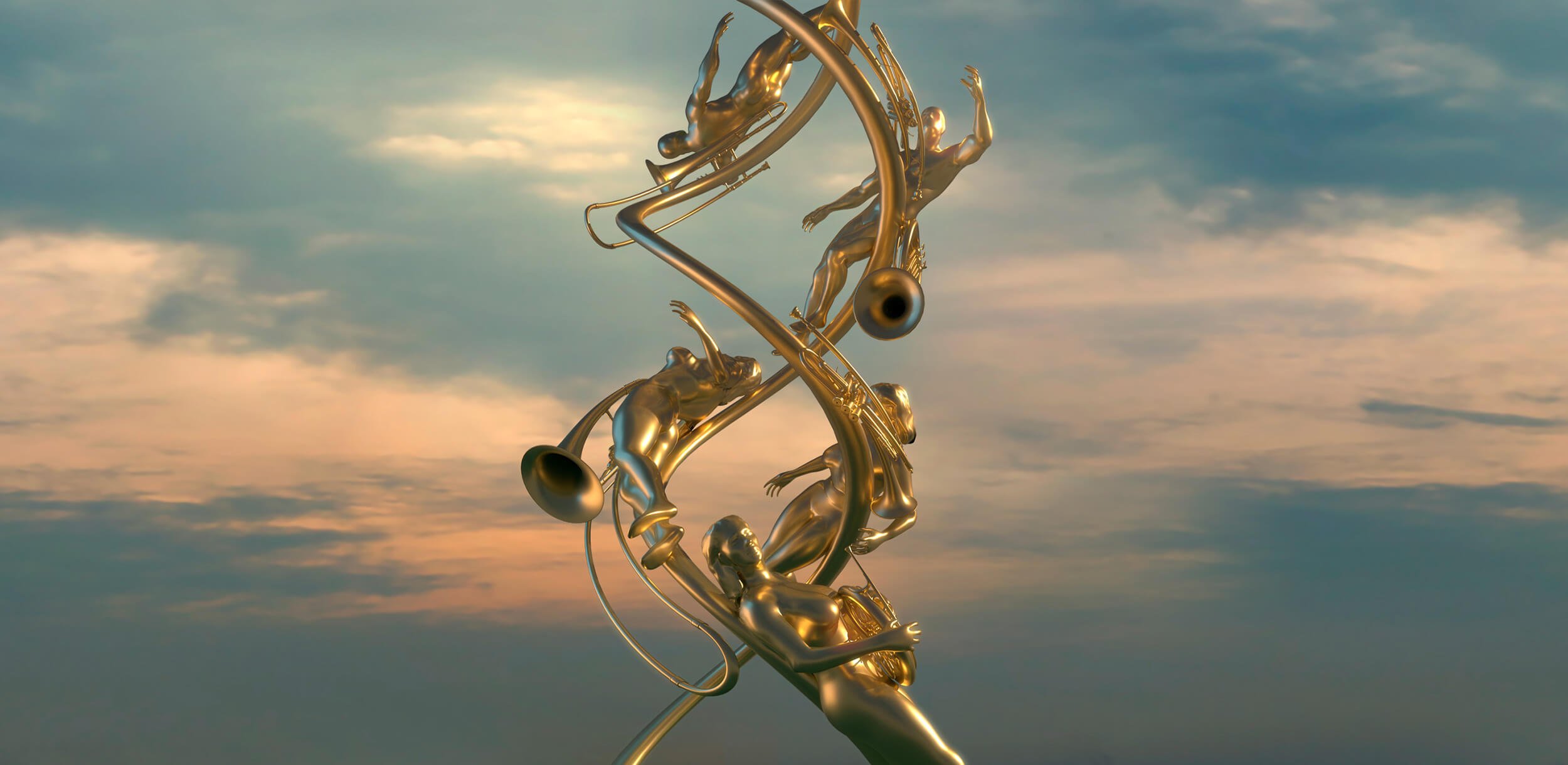
Woven Brass
Oslo Philharmonic Brass
-
Woven Brass consists of fourteen individual pieces for brass instruments in a variety of styles written over a period of a decade and a half, woven into a single work with overlapping musical material. Digital streaming services have led to new ways of consuming music: While some zap and shuffle music online, others still consider an album a complete work to listen to from beginning to end. Woven Brass is an attempt to cater for both modes of listening: There are musical aphorisms just half a minute long, works lasting up to fourteen minutes, and an overall conception of the album as a single, unified work in which all the elements are woven together into an hour-long musical narrative.
A work may be identified by its musical material. I have attempted to play around with our perception of the individual pieces’ identity and their musical boundaries. The music on this recording uses musical melodic building blocks in the traditional sense; to me they create a feeling of closeness and physical presence. Nonetheless, it is the way in which the musical ideas interact that gives the music life and builds up an extended narrative.
BMC, 2017
-
-
The Lapse of Time
- an oratorio on Charles Darwin: The Origin of Species
Recorded by Ditte M. Bræin, Frank Havrøy, Inger-Lise Ulsrud, Ensemble 96, Telemark Chamber Orchestra, Nina T. Karlsen / Per Kristian Skalstad | Simax Classics
Nominated to Spellemann 2022 (Norwegian Grammy)
-
The Lapse of Time is an all-evening oratorio based on strikingly poetic excerpts from Darwin's revolutionary book On the origin of species written by the Norwegian composer Bjørn Morten Christophersen. The work is a tribute to the evolution of life on earth and intended for musical sharing between natural science, religion and art.
Indeed, it is surprising to find a vein of poetry running through a dissertation of natural science. But that is in fact the case with Darwin's iconic book, which at the same time is one of the most ground-breaking scientific works ever written. The book is truly worth reading for any layman. That one cannot really say about Einstein's theory of relativity or all the articles pouring out of the various universities today. Christophersen has set music to excerpts from The Origin of Species after carefully adapting them into singable phrases. Nevertheless, nothing is added, we hear only Darwin's own words in this oratorio.
The Lapse of Time is a large-scale musical drama in which two soloists, choir and orchestra move through slow-building waves from the barely audible to magnificent climaxes. The work is full of life: we really feel the crawl and crabbing within the orchestra while the singers chant an astonishingly poetic text, taking its origin into consideration. Profound, playful, dramatic and humorous passages are woven together in a large organic musical course. The Lapse of Time also has a sacred flavor to it by involving both the church organ and mimics of plainchant. Through this work, Christophersen hopes to create a basis for shared wonder and excitement between natural science and religion.
Life on earth has developed through a time span far beyond our own to emerge as overwhelmingly rich and complex as we see it today. This idea was a completely new realization in Darwin's time, and it met strong opposition especially from the church. And it is still controversial in many circles today. After all, we can't easily grasp billions of years in our consciousness. So how can we experience that minor changes from one generation to the next can result in such a diversity? Perhaps through music? For music is the very form of art suitable for experiencing time in various ways. In this work, for instance, the orchestra and choir initiate a dialogue with their own past, that is, with parts of the work we have already heard. Music from our memory emerges into our presence and affects the future of our "now", so to speak.
Nominated to Spellemannsprisen (Norwegian Grammy) 2022 in category Composers' Prize
-
based on
Charles Darwin: On the Origin of Species (1859)adapted by
Bjørn Morten ChristophersenPART I: WATCH THE SEA AT WORK
Watch the sea at work
grinding down old rocks.
making fresh sedimentExtremely slow
The lapse of time
the monuments around usLong lines of inland cliffs formed
great valleys excavated
by the slow action
of the coastal wavesThe lapse of time
the monuments around usFrom the first dawn of life
all organic beings
resemble each other
in descending degrees
classed in groups under groupsFor species have changed
and are still slowly changing
successive slight favourable variations
a slowly changing drama
One species given birth to otherThey all fall into one
grand natural systemThe lapse of time
the monuments around usPART II: STRUGGLE FOR LIFE
Struggle for life
Struggle for existenceInnumerable beings
on the face of this earth
struggle with each other
in the race for lifeSevere competition
through the course
of thousands of generationsThe lapse of time
the monuments around usEvery single organic being is
striving to increase in numbers
yet, all cannot do so
for the world would not hold themLet the strongest live and the weakest die
INTERLUDE 1: MISTLETOE
Mistletoe struggles
with other fruit-bearing plants
to tempt birdsAs the mistletoe is disseminated by birds
its existence depends on birds
it struggles with other fruit-bearing plants
to tempt birdsSome speciesmay be nowincreasingin numbers
yet all cannot do so
for the world would not hold themEven slow-breeding man
there will not be room for his progenyPART III: CHANGE
Evolve! Change!
to beauty and infinite complexity
Remarkable fact!
beauty and infinite complexityThe lapse of time
the monuments around usNatural selection
is daily and hourly scrutinising
silently and insensibly working
throughout the worldWe see nothing of these
slow changes in progress
until the hand of time has marked
the long lapse of agesA grain in the balance
determines
which shall live
and which shall dieFor those which do not change
will become extinctPART IV: EXTINCTION
Like the branching of a great tree
from a single stem
extinction
widening the intervals
extinction
widening the gaps
between speciesAll living species
connected
with parent-species now extinct
connected
with more ancient speciesInconceivably great number
of intermediate and transitional links
between living and extinct
Such have lived upon this earthThis wonderful relationship
between the dead and the livingINTERLUDE 2: BONES Bones!
-in the wing of the bat
-in the flipper of the seal
-fin of a porpoise
-in the fore leg of the horse
-in the arm of the monkey
-in the hand of a man
inherited from a common progenitorBlind animals in caves:
the eye is gone!
Convert a swim bladder into a lung
Remarkable fact!Natural selection is daily and hourly working
throughout the worldPART V: NATURA NON FACIT SALTUM
(NATURE MAKES NO LEAP)
During the vast periods of time
before Silurian age and the present day
the world swarmed with living creaturesWhat an infinite number of generations
which the mind cannot grasp
must have succeeded each other
in the long roll of years
Slight successive favourable variations
only by very short and slow steps
a slowly changing drama”Natura non facit saltum”
The lapse of time
the monuments around usThe mind cannot grasp
a hundred million years
it cannot perceive the effects
of slight variations
through an infinite number of generationsFor the lapse of time
has been so great
as to be utterly inappreciable
by the human intellectExtremely slow
The lapse of time
the monuments around usEPILOGUE
Look! Watch! Admire!
the truly wonderful power
of natural selection
around us!Look! Watch! Admire!
the sea at work
the flipper of a seal
the fin of a porpoise
the mistletoe, the birds
the remarkable fact
Around us!All speciescannot increase
for the world would not hold them
even man, there will
not be room for his progenyLook! Watch!
Admire us!
the human mind!
the intellect!Look! Watch! Admire!
the wonderful struggle for life
the hand of time
the beauty and infinite complexity
the monuments of which we see
around usAround us!
-
Review in Gramophone. Brian Morton , 28.6.2023
So original and convincing that any concern about rock-opera cliché quickly disappears
An oratorio based on Darwin's On The Origin Of Species might seem to risk predictability more than than obscurity, but Christophersen's handling of large masses of time, the slow geological changes of ‘Part 1: Watch The Sea At Work’, is so original and convincing that any concern about rock-opera cliché quickly disappears. What makes the music urgent and sets it apart is that the whole scenario has shifted towards the spectre of extinction as the endgame of natural selection, something Darwin had not quite anticipated, but rendered all the more poignant and dramatic by the work's preparation and premiere being played out against the background of global pandemic. The choir brings a thrilling commitment to the singing and Sean Lewis's sound design (which alone justifies the comparison with rock-music projects of similar ambition) is immaculate.
-